King of the Mountain

King of the Mountain

In psychology there is the concept of “loss aversion.” In essence, people experience losses more painfully than missing out on equivalent gains. In other words, they experience losing $5 as a worse outcome than failing to gain $5, although in some sense, either way you are out $5. Loss aversion has been affirmed in studies and controlled experiments.

I think it has to do with the perception of ownership, that somehow when something you “own” is taken from you, you lose a part of yourself. That’s what makes it more painful. It has to do with the ego and how the sense of self expands to incorporate the material goods which we consider to be our “property.” That’s what attachment to material goods means, and why losing a material thing feel like losing a piece of ourselves, and having someone take it without our consent (“steal” from us) feels like an attack on our person.

I only put some words in quotes to underscore how it’s all a matter of perception, not to deny or denigrate property rights. It’s OK to own things.

What prompted this musing is that, this summer, I helped to clean up a hoarder’s house. He is an elderly man who spends all day sitting in one chair, watching TV, and just lets stuff, including junk mail and packaging, accumulate all around him. It’s like he is sitting on a mountain of junk, a King on his throne. Over the years, much junk has accumulated and filled all the space in the house. What we were doing to help was going through piles of possessions and sorting them, organizing them and picking things to throw out. But trying to be discretionary about it, rather than rudely throw out everything (which would have been a lot easier).

Rather than dwell on this man and his hoarding, I want to think a little about my own habits of material accumulation. I’ve already blogged about that time the water spirits destroyed my house, and the effort it took for me to move everything I “own” into my partner’s home. “Why do I have so much stuff?” I wondered. I own a lot of books, board games, and discs of movies and music, and like to think I have a curated collection of the best of the best, all worth keeping. I’m loathe to lose any of it.

When I moved into my partner’s home, it took some Tetris skills to fit all my junk stuff into her space. I fought to have a space for my games and books, but even then there was only so much room and some of it still boxed. Furnishings and utensils were sort of shoehorned into place amidst what she already owned, and a little bit of it even got donated to Goodwill. More probably could; there’s stuff we never use. And then there’s the weird thing with the clothing, where I have an entire wardrobe of business casual office wear that hasn’t seen use since March 2020. But I’m not sure if can get rid of it – what if the pandemic ends and I have to go back to the office?

I’ll say this about the stuff we never use: over time, the attachment fades. When I first moved it in, some random thing I brought was like a precious part of me. But now, if I discover something in a closet that hasn’t been used in a year, it feels less important. It’s just a piece of debris. But even then, to think of removing it from our lives feels like losing something of potential value. It’s painful, like picking off a scab. What King wants to lose even the smallest part of his Kingdom?

We all know from the Good Book that spiritual concerns should take precedence over material possessions. But in this consumerist age we can only forgive ourselves for our attachment to those material things which help define who we are.

Do not lay up for yourselves treasures on earth, where moth and rust destroy and where thieves break in and steal, but lay up for yourselves treasures in heaven, where neither moth nor rust destroys and where thieves do not break in and steal. For where your treasure is, there your heart will be also.

Matthew 6:19-21
Finding Yourself in the Internet Age

Finding Yourself in the Internet Age

Do you remember life before smart phones? I sometimes have a hard time imagining what it was like. I mean, I was there; I should know. We had to write down the directions to drive places, since we couldn’t just bring it up on our phones. We had to have our music collections in some sort of recorded format, like tapes or CDs, and keep them in the car. You couldn’t just look up any fact you wanted to know in an instant. But you did know a lot of other people’s telephone numbers.

My BFF tells me I’m too dependent on my phone now. My little pocket assistant. I get lost driving without it. I’ve tried to navigate on my own; to challenge myself to get somewhere without using Google maps. Usually that doesn’t work, and out comes the smart phone to rescue me.

It wasn’t always like this, but through the fog of time it’s hard for me to remember those ways of life, from even just fifteen years ago.

One thing I do remember is that back in the mid-2000s, when Web 2.0 was still new, I had a pretty good Internet presence, if I do say so myself. Granted, it was a Web 1.0 presence: a static vanity web site, a blog. I did a little bit of manual search engine optimization, editing the metadata on my static HTML pages in my text editor. It was good enough for us back in those days. A Google search of my name ca. 2006 would have had my pages on the top of the search results; I kid you not!

Today, that’s not likely. My Internet presence is lost in a sea of like named people, because everyone has a smart phone and multiple social media accounts now. I’m no microinfluencer, not even a nanoinfluencer. I never realized how many people with my name there are out there; I thought it was kind of unique. I was used to being the only “Barrera” in whatever social milieu I was in, outside of my family. Now that my social milieu is all of humanity on the Internet, I’m discovering that my name isn’t so unique after all.

It’s the same with usernames. Technically, I was on the Internet as far back as the 1980s, since I had user accounts and email addresses at Virginia Tech, where I went to college. I remember my email address was “sbarrera@vt.edu.” For a long time after that, I was used to being “sbarrera” or “stevebarrera” whenever I signed up with a new account somewhere. But no more; those usernames are always taken on any major site. I have to come up with something clever, or settle for a username with a string of numbers at the end.

As the global population continues to soar and the Internet continues to gobble up civilization, how will we have usernames for everyone? We’ll all end up named with numbers at the end, like in a dystopian sci-fi society. Like THX 1138. The future is here, I guess.

Don’t get me wrong; I love the Internet. I spend most of my waking time there. I’ve been fascinated by computers since I was a teenager, and chose computer work for my professional life. I’ve been on the world wide web since the beginning, and always had fun with it. The Internet is where I live; it’s surely where I’ll die. It’s always in our pockets, part of the background of life.

Glee, Another “Old” TV Show to Review

Glee, Another “Old” TV Show to Review

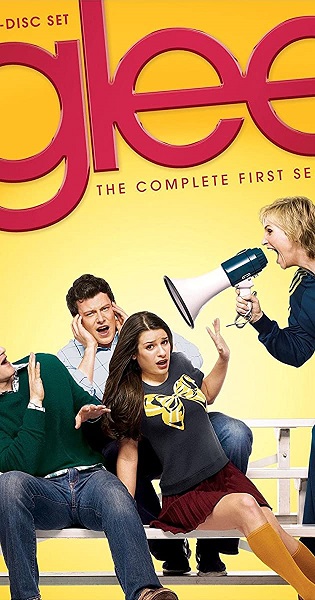
Some time back we were watching Smallville, and I noted in my mini-review that the family might move on to the popular television show Glee next. We did binge-watch the first season some time ago, but didn’t go any further. I guess we weren’t pulled in. We watched it on Netflix. The girl and her boys had already watched the series when the boys were young; they were interested in rewatching it and in catching me up on it. I’m always way behind on my pop culture consumption.

Here is my take on the show.

Glee revolves around a high school glee club and their competition with other better-funded and more talented glee clubs in other high schools, as well as their competition for status and funding with the more prestigious cheerleader club in their own school. If you don’t know what a glee club is, it’s a musical or choir group.

In this case, the club is co-ed and performs musical numbers with a significant amount of dance choreography, which are way more sophisticated than what you would expect a high school glee club to be able to pull off. You don’t even see them rehearse much! They kind of cheated with the casting; the star student of the show, Lea Michele, was a child actress on Broadway. As is typical for these kinds of TV shows, the cast of students is a bit older than high school age. This all leads to a very unrealistic portrayal of an extra-curricular activity, but if you think of this show as basically a musical, then it’s fine for it to be unrealistic.

Glee might also be unrealistic in how it portrays the rest of the high school experience; at least, that was my impression. The show covers typical high school concerns like bullying, cliques, overbearing parenting, teenage sex – but in over the top ways. I couldn’t help but wonder, “is that really what high school is like now?” I think it’s meant to be parody to some extent, but as I haven’t been in high school since the 1980s, I guess I could be wrong. I do think it captures one Millennial generation theme well: it emphasizes diversity and inclusivity, and the students always choose what is best for the group in the end.

Meanwhile the Gen-X teachers and staff are caught up in their own drama, and struggling to find their footing in their personal and professional lives. A career in high school education isn’t exactly glamorous or fulfilling, as it is portrayed. The one Boomer on the cast (Jane Lynch was born in 1960 so I’m giving her that) portrays the domineering cheerleader coach, and she is driven to the point of insanity. Again, one wonders, “could a teacher really get away with that?” She does have her redeeming qualities, however, which we discover as the season progresses.

The show aired from 2009-2015, which puts it squarely in this Crisis Era, and means that these characters are all in the second wave of their respective generations. In other words, the characters would have been born in the 1990s, since they are teens in 2009. The actors, however, are first wave Millennials, born in the 1980s. It’s odd, but it does allow the show to explore more mature themes.

Sadly, Glee’s cast seems to be cursed; no fewer than three cast members have died in the past decade, with one of them surrounded by scandal. Is it really a curse, or just bad luck? I guess that’s the same thing. It’s not enough of a taint to stop me from wanting to watch the show, which is what happened to me with regard to the scandal around the Smallville cast.

The Millennial generation is now on the cusp of middle age, so it is not surprising that tragedies befalling their individual members have accumulated. Things do seem less sunny for them now. But I’ll try to conclude this little review on a more positive note.

With it’s thrilling musical numbers, and fun energy, Glee is enjoyable even though its characters and plot are unrealistic. It’s like a relic of a not so distant past when there was more optimism surrounding the prospects of the young generation. Just think of it as a musical when you watch it, and hope, like I do, for a happy ending.

A Noir Sitcom

A Noir Sitcom

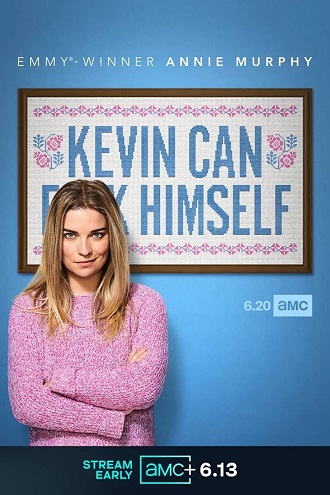
← My partner and I recently watched the first season of this intriguing show. We were drawn to it because it stars Annie Murphy from Schitt’s Creek, which is one of the best television shows ever made (I haven’t blogged about it before, but there you have it). Her new show is called Kevin Can F**k Himself, and is available on AMC+ streaming for all you cord cutters. Why she always ends up on shows with curse words in the title, I couldn’t tell you.

Kevin Can F**k Himself is a dark comedy and a parody of sitcoms that runs with the premise that a clichéd sitcom marriage is actually highly toxic. The wife and lead role, played by Murphy (b. 1986), is trapped in a living hell she is desperate to escape. The titular husband is played by Eric Petersen; I couldn’t pinpoint his birth year but I believe he is on the Generation-X/Millennial cusp.

The show uses an unusual contrivance to contrast “sitcom life” with “real life.” It takes some getting used to but I think the creators pull it off. It has good writing and excellent performances by the leads, as well as by Mary Hollis Inboden (b. 1986) in the supporting role of next door neighbor buddy.

Traditionally, sitcom television is “comedy of errors” humor deriving from misunderstandings/poor communication. Someone overhears something, misconstrues the meaning, and hijinks ensue. By the end of the episode everything is cleared up and back to normal (status quo ante). The characters are typically two-dimensional and stereotyped, foils for one another and fodder for repeated jokes.

In Kevin Can F Himself these tropes are twisted and the consequences become tragic. Kevin’s lack of communication skills and simplistic personality are a nightmare for his wife, Allison, who somehow is unable to break out of her own responsive patterns when she is in his presence. Miscommunication isn’t a fount of humor, it’s the corrosive destroyer of a marriage.

The characters are Millennials (technically geriatric Millennials), and the show explores themes that resonate with their generation’s experience. In particular: the relative immaturity of men relative to women, the difficulty of forming satisfactory relationships, and the lack of economic opportunity for the working class. As staples of sitcoms about married, suburban life in a gentler past, these themes might have provoked light humor, suitable for a laugh track. But for Millennials in the throes of late stage capitalism, these problems of the middle class have mounted to the point of being unbearable, and the humor has become dark in turn.

Kevin Can F**k Himself thus ends up blending genres. It’s a sitcom that bleeds into a noir show more in keeping with the times. Unlike what usually happens in a sitcom, it does not return to status quo ante at the end of each episode, but has an ongoing, developing story arc. Whether the show is a tragedy or a comedy actually depends on the final outcome, which hasn’t yet been determined. Season 1 left us with a major plot twist, and I’m hoping that the show gets renewed for another season. It’s an out-of-the-box creative effort that deserves a longer run.

Subreddit of the Week: insaneparents

Subreddit of the Week: insaneparents

WARNING: This post contains spoilers for the movie The Shining.

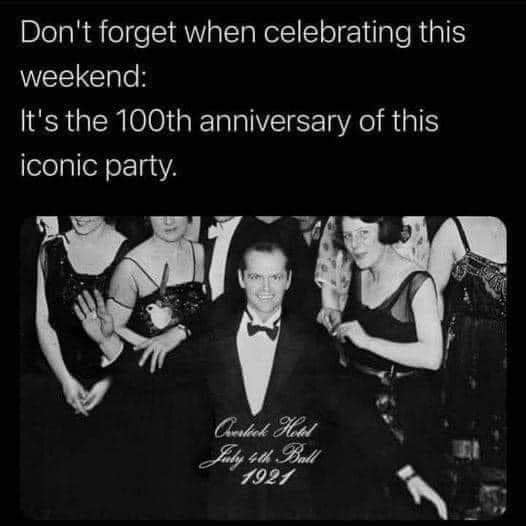
You may have seen the meme that Independence Day 2021 was the 100th anniversary of a famous fictional event: the 1921 July 4th Ball pictured at the end of The Shining. The event is depicted in a photograph that mysteriously features a younger version of Jack Nicholson’s character, Jack Torrance. In celebration of this anniversary, our family decided to watch the movie on the night of July 4th, even though we’ve all seen it multiple times, it being an excellent and iconic example of the horror genre.

The highlights of the film are Nicholson’s creepy, expressive performance, and the tense, suspense-building score which is artfully synchronized to the action. The camera work is great, too, and the film shows how much emotion can be generated just from pacing and music, with slow buildups to cathartic release. The strings slowly rise, and then the axe suddenly falls, and the viewer’s heart skips a beat. But frankly, the film is a little light on story, of which there is much more in Stephen King’s book. The sequel movie from 2019, Dr. Sleep, drawing more story from the novel which it adapts, is a supernatural horror action adventure with a much richer plot.

In The Shining, Jack’s son Danny is played by Danny Lloyd, who does a decent enough job of portraying a harried Gen X kid dealing with less than ideal parenting, not to mention bizarre otherworldly events. Here’s the scene from the end of the film where he escapes his deranged father. Note his inventive survival skills. That really marks him as a Gen Xer.

When I watched this scene, I couldn’t help but imagine how it would look as a post on the subreddit /r/insaneparents. Something like, “when I was a kid, maybe about 10, my Dad chased me through a snow-covered hedge maze with an axe – he really wanted to kill me, I’m not joking – but through some misdirection and careful hiding I managed to escape him. Never saw him again after that, I actually think he might have died that night. Can’t say that I miss him, but I will say that the experience really made me who I am today…”

If you don’t know about this subreddit, it is basically a place where people go to share the bizarre and unwholesome parenting behavior they have experienced. I imagine that most of it is Millennials calling out their Boomer and Gen-X parents; one can never be sure since reddit is mostly people posting anonymously. It is possible that older posters are bringing up their long ago childhood experiences, or that Homelanders (the post-Millennials currently in their early teens) are already sharing their own victim of parenting horror stories.

I imagine that this is mostly a subreddit for Millennials not only because reddit itself was founded by Millennials, but also because Millennials are champions of Internet reviews. It all ties into Millennials’ collective peer personality, which seeks rational consensus on the best choice. Here’s a post on LinkedIn that shows what I mean. More and more, choice in the marketplace is driven by communal decision making, rather than personal preference.

As this generation has risen into adulthood, they have helped drive the proliferation of reviews on commercial web sites like Amazon and on web directories which also function as review sites, such as Yelp. As students in higher education, they have access to resources to rate and review their educators – why shouldn’t they know ahead of time if a professor’s class is worth taking, or be able to give their feedback after taking a class? In a way, the subreddit /r/insaneparents is just a site for reviews – albeit anonymous ones – of parents.

Parenting, I believe, is the hardest job in the world. Everyone is expected to do it, but the only training anyone gets is a bad example. Since not everyone makes the strongest parenting choices, you get a subreddit like /r/insaneparents. So parents out there, do try to raise your children well, or you just might end up getting a bad review on the Internet.

War For The Planet Of The Covidiots

War For The Planet Of The Covidiots

‘The war has changed’ blares a Washington Post headline, referring to an internal CDC document reassessing messaging about the coronavirus in light of the new delta variant. What’s changed is that the prevalence of a mutated strain of the virus, which can spread even among the vaccinated, means it might make sense for masks to come back on and for people to start practicing social distancing again. But how well can the CDC influence people’s behavior, with the deep levels of mistrust in our society, and the fact that the CDC’s messaging has shifted around over the course of the pandemic? Never mind that the message changing actually makes sense, given that the science also changes, because we are dealing with a novel coronavirus.

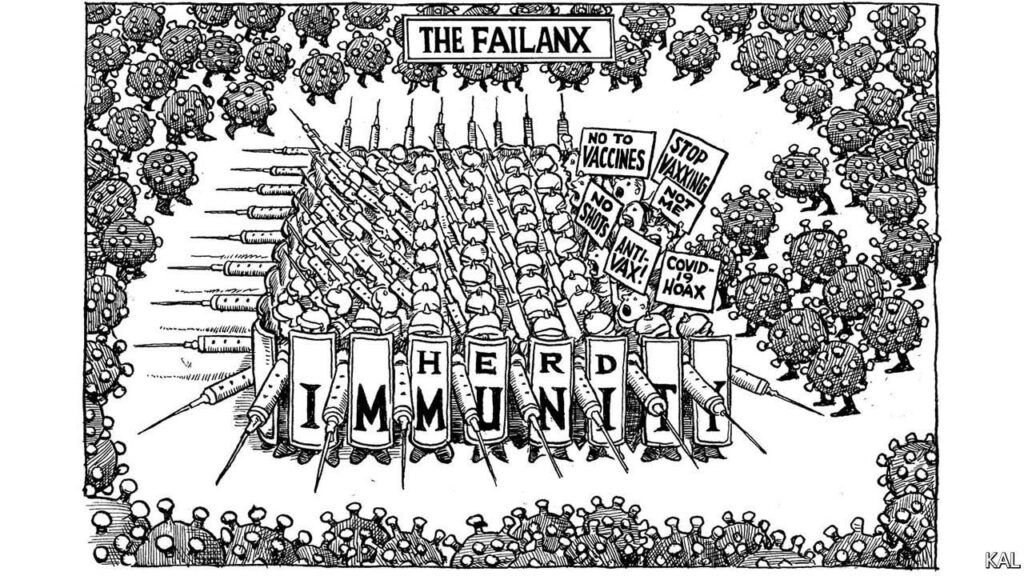
Now look what’s happened to the prospect of herd immunity. As this cartoon by Kevin Kallaugher implies, there was just too much vaccine resistance to get to the levels that could have prevented the spread of this variant. And with the mad rush to “return to normal,” it’s probably too late.

So we don’t just have a war against a disease. We have a war against impatience. A war against ignorance. I’ve already blogged about what a shame it is that the pandemic became politicized. That was probably unavoidable, given that everything gets politicized these days. But political affiliation isn’t the only thing dividing the vaccinated from the unvaccinated. Race, income, and education level are also factors. The implosion of trust in our society has been very costly.

If GOP leaders would just get on board with a vaccination program, it would go a long way towards increasing vaccination rates and getting us to the other side of the war. Instead, we have to wait for the Republican con job to exhaust itself. Eventually the marks will all clue in, even if they have to sneak their vaccinations in behind their friends’ backs. You know, to save face. It’s truly pathetic.

I hope that we are in the winding down phase of this Crisis, and that the war will soon be won. From my vantage point, not leaving home much, it’s hard to tell if we’re in the darkest hour, or in the denouement. I think I’ll just be staying under lockdown and keeping my mask on for a bit, ’cause this ain’t over yet.

Theater Emerging

Theater Emerging

A year ago we were deep in the pandemic, and my best friend and partner, who works in the theater industry, was not able to work. All of the summer work that she had lined up in 2020 evaporated with the lockdown. She could have just stayed at home for all I cared, but she is too driven and needed to do something, so she ended up taking up a job as a census enumerator. This stressed me out a bit, as she spent the late summer and early fall wandering the area, visiting the homes of recalcitrant people. I mean, people who don’t do their census aren’t going to want to be bothered about the census, right? I thought she was very brave for taking on this job. After that gig ended, she worked for a high school as a Covid safety officer, which entailed patrolling the halls and making sure the kids were following protocols (they weren’t). That job ended with the school year.

Aileen Lynch McCulloch

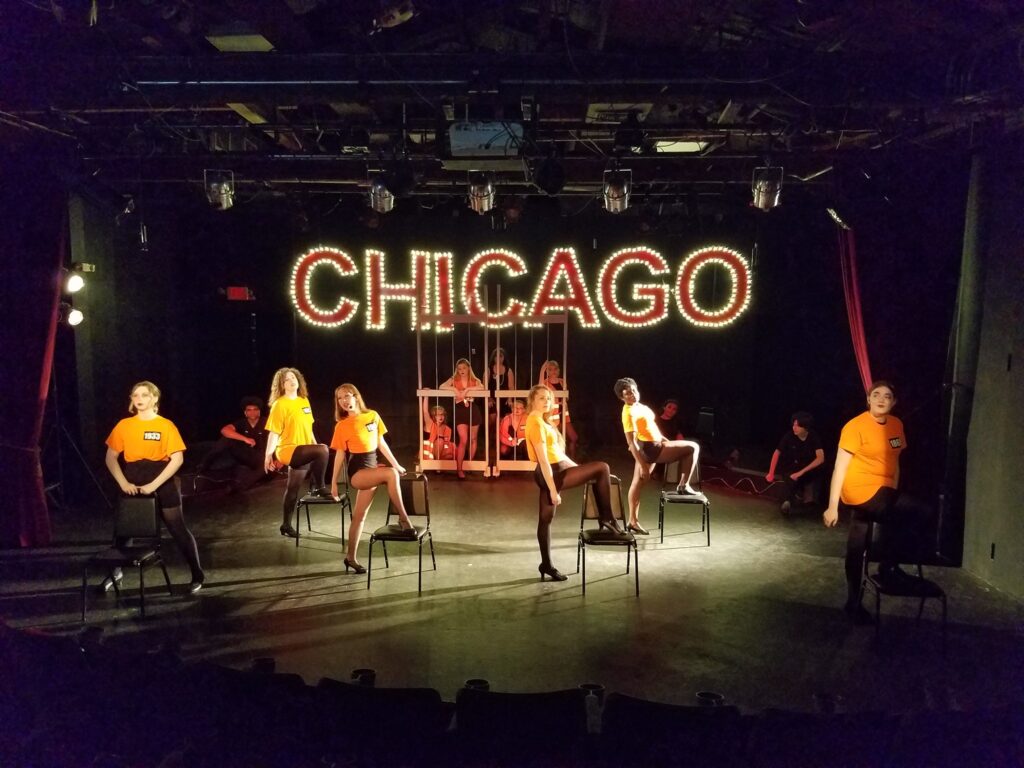
Now it’s summer, and with the pandemic “over” – or at least “winding down” – she has gone back to work in her field. I’m glad for that, because she is clearly much happier. She just finished running a production workshop for teens, producing the musical Chicago: High School Edition. If you don’t know what this means: a production workshop is an educational program, like a summer camp, where each student pays a fee to participate. Chicago is a famous musical by Bob Fosse and Fred Ebb which satirizes celebrity crime culture in the 1920s. “High School Edition” just means that the script is shortened and cleaned up a bit, so it is appropriate for younger people.

The fees the students pay cover costs like rent to the space, and the licensing fee to the rights holders. This latter cost is substantial – as in three figures – and depends on the number of performances. In this case, there were four live performances (as opposed to streaming online performances, which was a popular way to do it during the pandemic). Rehearsals started while there were still significant restrictions on group gatherings, so they were online at first. In fact, the auditions were all done by having the students submit videos. Note that every kid who auditioned was going to get cast (that’s kind of the point of an educational workshop), but auditions are still used to cast the specific roles.

Once restrictions eased, some time in June, rehearsals moved to the theater space. At first, many kids weren’t yet fully vaccinated, so everyone wore masks while rehearsing, and temps were taken. By the end of rehearsals, almost all of the kids were vaccinated. I got to see a couple of the dress rehearsals during tech week! If you don’t know what “tech week” means, it’s the final rehearsal phase when the lighting and sound is integrated into the show. Here’s a photo from dress rehearsal, of the merry murderesses performing the Cell Block Tango:

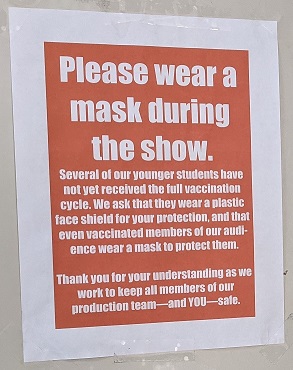
The show went up in early July, on the weekend after Independence Day. Audience members were required to wear masks, though the performers did not, except for two who wore face shields. Those were the two cast members who were not vaccinated. Some audience members refused to come see the show because masks were required. This was actually the desired outcome, and it was probably for the best, since the Delta variant is now spreading like wildfire.

Here’s a short review I posted after the first show:

It’s too bad there are only four performances of this show, since the cast and crew have pulled together a tight and energetic production, showcasing the talents of multiple young performers, directors and designers, and you won’t want to miss it. A teen production of Chicago HS Edition, on the heels of the pandemic, was a gutsy choice for director/producer Aileen Lynch-McCulloch, but as is usual for her, she has pulled it off. She demonstrates her knack for finding the perfect cast, and for translating a script onto the stage in a tight time window and with a shoestring budget. Minimalist set and costume choices, on a stark stage with smooth lighting, succeed in conveying the characterizations and the storyline, giving the talent the opportunity to shine. The director’s faith in the ability of youth and commitment to helping them find their voice have once again resulted in an amazing production. Get a ticket if you can!

I wrote this blog post to extol the talents of my good friend, Aileen, and to raise awareness of the challenges facing the theater industry as we emerge from the pandemic. This production of Chicago was slipped right in between the beginning of vaccinations and the surge of the Delta variant; it may have been a fortuitous occasion that can’t be repeated in the near future. In her role as Artistic Director at The Center Theater, Aileen would like to plan more productions, as part of her program called The Arts Bubble, “a healing project created to help audiences return to the live performance spaces.” But obviously this depends on the state of the pandemic.

I’ve been following Aileen’s work for many years, and it really is amazing to behold. She can handle all aspects of a production – directing, producing, costuming, set design, tech, PR, you name it. When she is working on a project, her commitment is total, and she seems to have an endless reservoir of energy on which to draw. But luckily she has people to help her, so she doesn’t have to do it all herself. She only needs to do three or four people’s jobs instead of ten or twelve.

She has people to help her because over her career she has built up a network of supportive friends, as well as young people who want to come back and work with her time and time again. Many of the teens and young adults who worked with her on Chicago have known her since they were children, when they first acted in a show which she directed. For a long time she ran her own theater company, Vagabond Acting Troupe, and she has also worked as an educator in schools and at other theaters. And she hasn’t changed her fees for over 30 years, while others around her have taken her approach and then raised the cost. Many of her students have gone on to Broadway tours, Cruise Ship entertainment and some have even started their own companies.

I mean, just the fact that Aileen was able to get large audiences to see Chicago and all willingly wear face masks is impressive. And if you think that wearing a mask is just “pandemic theater,” then I submit to you this thought: not wearing a mask is “pandemic theater.” Because everything we do socially, how we dress and how we act, is meant as a signal to others; it’s all a performance. Life is theater, and theater is life. As Shakespeare put it, “All the world’s a stage, and all the men and women merely players.”

So please join me in congratulating my dear friend Aileen Lynch-McCulloch on another successful theater production. And please get vaccinated, because if we don’t get this pandemic under control, we may all have to climb back into our cocoons, and wait another year before live theater can emerge once more.

An Emerging Values Consensus?

An Emerging Values Consensus?

You might look at that title – “An Emerging Values Consensus” – and think, are you kidding?? The Culture Wars and the partisan divide between liberals and conservatives (or the blue zone and the red zone) have been a fixture in our society for decades now. I’ve already written a series of blog posts on the topic, in which I concluded that we were experiencing a “Red-Blue” identity crisis as a society. Which way will we break? Or could we even break into two – split into two societies altogether, possibly violently? There is serious discussion of impending civil war out there.

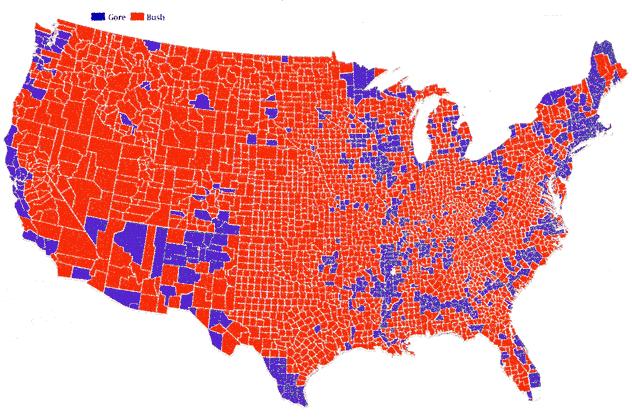
You’ve probably seen the above map before. It’s from the 2000 Presidential election, and shows the counties that voted for Bush in red and the counties that voted for Gore in blue. It’s around this time that the red zone-blue zone idea came about – the idea that there were two different “values camps” with competing visions of what America should be. Baby Boomers were in mid-life then, and their values-orientation dominated American culture. Their passion and moral zeal is what made the divide between the two camps so deep and so unbridgeable, damaging our political system to the point that many now wonder if it can be repaired. Just think of the events of January 6th this year to understand what I mean.

Back around that time, on an old fashioned web site that I built, I attempted to list out the differences between these two values camps. The list is a bit over-generalized, a bit stereotyped; I can’t deny it. I’m sure many people believe a little bit from column A, a little bit from column B. But to some extent these differences do define the partisan divide, and the thing is, as the partisanship has just worsened and worsened, it’s gotten to the point that it doesn’t really matter what your particular “nuanced” belief system is. The political struggle has become existential, and you have to pick a side and stick with it.

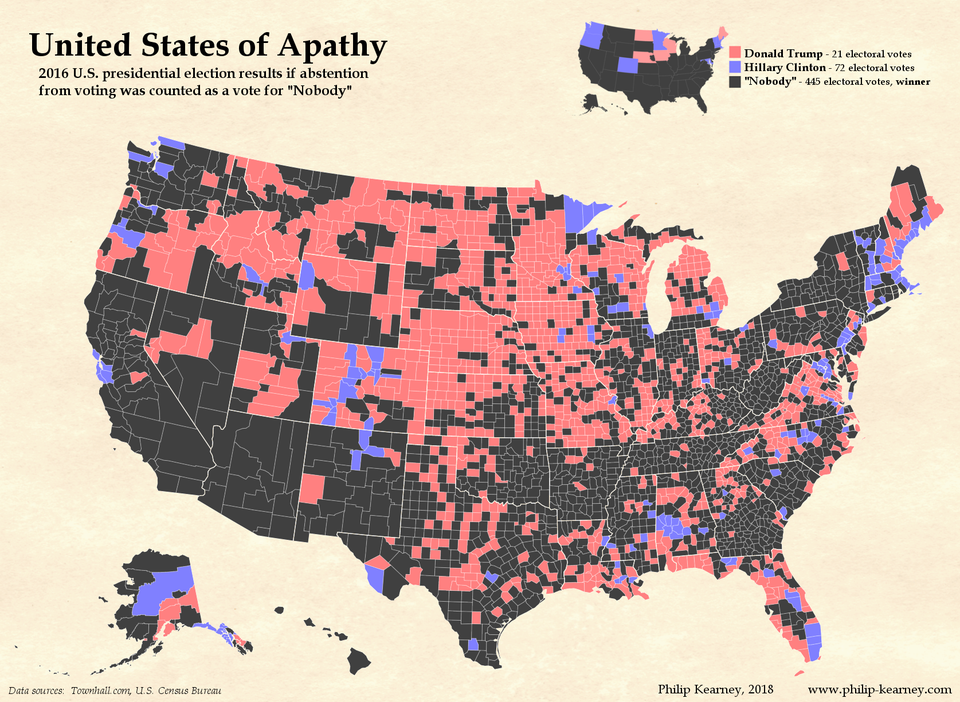
Or not, I suppose. You could just not belong to either side. I have a feeling that many of my generation, Generation X, are in that particular “values camp.” It’s the camp of people who mind their own business and just want to be left alone. As the map below show, if non-voters counted in the electoral college (I know, that makes no sense) then “Nobody” would have been elected President in 2016.

This isn’t to say that non-voters lack values or moral beliefs, just that they might be having trouble finding a political party to fit into. As I already suggested, most people probably take their beliefs a little from the red side, a little from the blue side. It’s even possible to show that the country isn’t so starkly divided geographically as the “red zone-blue zone” maps suggest, by measuring both Republican and Democratic votes per county and constructing a “purple” spectrum map like the one below.

Red v. Blue spectrum version from the 2016 Presidential election.

All I’m trying to say here is that the neat division of values into two columns doesn’t necessarily reflect how people think. And now that Boomers are aging out of mid-life, being replaced by Generation X, moral righteousness as a guiding principal of politics is losing its shine. As I already blogged, Boomer moralism has rendered politics dysfunctional. Younger generations yearn for a practical approach to politics, one that can solve the many thorny problems facing our society. It is perhaps unfortunate, then, that the current mid-life generation, Generation X, which is known for pragmatism, also eschews politics.

I’m just rehashing what I’ve already written about before, so back to the title of this post and the idea of a values consensus. Assuming America is not going to split into two societies, we’re eventually going to settle for some version of “a little bit of column A, a little bit of column B” that works for the majority of us. This will grow more and more apparent as the morally righteous Boomers, who pretty much can’t ever have their minds changed, age out of public life. Those who disagree with these values, who reasonably can claim that there is no “consensus” since they disagree, will be relegated to the sidelines of public life. In fact, you can already see this happening. Isn’t that exactly what hashtag movements, cancel culture, de-platforming are all about? Effectively, if unfairly, enforcing a majoritarian viewpoint?

So what exactly is the consensus that is emerging? I actually tried to predict what it might be way back in 2002 when I first created the red values v. blue values page. Then I tried again and again around the time of the 2016 election. How exactly am I doing this? Well, my admittedly non-scientific approach is simply to monitor discourse on major platforms on the Internet to see what’s going on. I check the reddit hivemind, since I really do think that is the premier site where Millennials are forging a consensus using the tools of social media.

Now maybe this puts me in a bit of blue zone bubble, since all the red zoners are moving to alternate sites like Gab and Parler (so I’ve heard). But doesn’t the fact that red zoners are shifting to less mainstream platforms tell you which way the consensus is going? Honestly, I think there are only two areas where the red zone’s view still has traction, and that is in the two most contentious points of the Culture Wars – gun control and abortion rights.

So here’s where I think we end up:

  • Pro-gun rights
  • Pro-marijuana legalization
  • Equal rights for LGBTQ
  • “Counter-culture” mainstreamed (everyone has a tattoo these days)
  • Pornography accepted
  • Continued restrictions on abortion, though it will never be fully banned
  • Justice and police reform
  • Reform to improve the lot of lower economic classes, even if it’s “socialism”
  • Pro-environmentalism policies to deal with climate change
  • A path to citizenship for “dreamers,” but immigration otherwise limited
  • Acceptance of a multicultural, multiracial, multi-religious society, to the chagrin of White Christian Nationalists

So now that this Culture Wars crap is out of the way, can we end the filibuster already and get some Universal Healthcare?

To Mask Or Not To Mask, A “Post”-Pandemic Question

To Mask Or Not To Mask, A “Post”-Pandemic Question

The masks have come off all around.

I got the first inkling that America was “back to normal” when I went down to the Delaware beaches on Memorial Day weekend. As I drove south through the beach towns on Route 1, I noticed that people out on the streets were not wearing masks. “Everyone here must be vaccinated,” I thought. At my destination, a beach resort where my Dad and stepmother live, this sense was compounded when we went out. There were crowds of people, with no one wearing masks. Well, there would usually be an occasional couple or family that were masked, but it was a tiny percentage of the total number of people.

We spent one evening at a bar, and I must admit it felt very strange to be in a crowd where everyone was unmasked. Throughout the lockdown in 2020, I had been having dreams about being unmasked in public, and feeling a sense of dread or guilt. There was only just a hint of that feeling as we sat in that bar, and had some draft beers and pub food. Everyone was very friendly, with the exuberant energy of summer vacation in the air. But what else was in the air? I wasn’t comfortable doing any more pubbing on that trip.

I was visiting because I am finally fully vaccinated, as are my Dad and his wife. It was a “first post-vax hugs” family reunion moment. I’m sure you’ve seen plenty of them on your social media feeds. I hadn’t seen them in person since 2019, so it was a wonderful visit. But I kept repeating the nervous little joke, “everyone in Delaware must be vaccinated, because…”

Back home in Pennsylvania, the masks are also coming off. Stores have stopped requiring them, even for their employees in some cases. I would guess that maybe half of customers in stores are still wearing masks, including me. I have a hunch that the elderly tend to go masked more than younger people do, and one can easily imagine why. I base this on casual observation, not data.

One thing I’ll say is that when I am masked in a store, even if I’m in the minority, I don’t feel uncomfortable about it. Meaning I don’t get any sense of being scorned by the non-mask wearers. I think everyone understands and respects people’s choices. It’s similar to the impression I got at the height of the pandemic, when everyone was complying with mask orders. It spoke to a willingness that the general public has to cooperate with public authorities, despite the fact that the pandemic became politicized. I mean, I read about anti-maskers melting down in public and even violence connected with people resisting mask mandates, but here on the ground, where I live, it is not something I have encountered personally.

We just got back from a Father’s Day trip to Knoebels Amusement Resort, an annual family tradition that was cancelled in 2020. It will be our only summer trip this year, since our other annual tradition, G-Fest, is also cancelled for 2021. Well, everyone at Knoebels must be vaccinated, too, based on the almost complete absence of face masks. Conspicuously, some families were masked, but it was less than 1% of people. Now, this is a venue where you are almost always outdoors, whether riding an attraction or eating a meal. We carried our masks with us but only wore them in a few instances of being in a confined space.

It was nice to return to normal, in one sense, but at the same time it felt like we were taking a chance, especially hearing about this new delta variant that is likely to become a scourge of the unvaccinated. And frankly, I’m pretty sure a large proportion of the visitors at Knoebels were unvaccinated, despite the fact that they were unmasked. I base this on the fact that the resort is popular with working class white people, and well, you’ll have to pardon my prejudice, but they tend to be on the MAGA side politically. The bumper stickers and T-shirts I saw while we were there only confirm this prejudice.

So 2020 is behind us now, and we are slowly changing back to the way things were before. But I have an ominous feeling that 2021 has more havoc in store for us.

What Do We Do To Get Through This Crisis?

What Do We Do To Get Through This Crisis?

I’ve been thinking about the way the book The Fourth Turning described the Crisis Era and its generational constellation and how, when we reached this era, we would all have roles to play based on our generation and phase of life. Based on this, here is some advice for each generation on how to best live up to that role do now that the Fourth Turning is here. Call them Life Pro Tips for the generational archetypes. You might have noticed the generations already following this advice to some extent.

Boom Generation (Prophet archetype) in elderhood. Be wise, and champion the values that need to be preserved through this Crisis Era. Emphasize the urgency of our need and be willing to make sacrifices for yourself, as well as expecting sacrifice from younger generations.

Generation X (Nomad archetype) in mid-life. Be pragmatic, cutting through process and complication to get things done. Resist the urge to sit back and let the world burn. Use your experience and savvy to lead and guide the Millennial generation.

Millennial Generation (Hero archetype) in young adulthood. Be responsible, and use your hivemind powers to reach consensus and to enforce good conduct among your peers. Have faith that we can make our institutions work again.

Homeland Generation (Artist archetype) in childhood. Be kind and considerate of others. Remind the older generations that love still matters and that we are all in this together.