TV Show Review: When We Were Younger
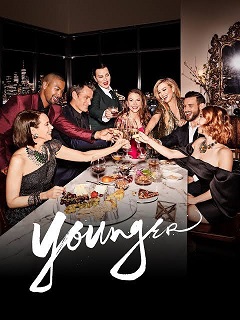
We’ve been watching and enjoying a show called Younger, which ran from 2015 to 2021, and is now available on Netflix.
Succintly put, it’s like a Millennial generation version of Sex and the City. The latter show was based on the writing of Boomer Candace Bushnell (b. 1958), and was about a group of professional women in New York City, played mostly by Gen Xers, who remain fast friends throughout the trials and tribulations of playing the dating game. It was set roughly in the 1990s. The former, from the same Gen X creator and producer (Darren Star, b. 1961), has a similar vibe, is set in the same city in the late 2010s, and is about a group of mostly Millennials.
Which isn’t even quite true, as the characters in the show are an even mix of Millennials and Gen Xers. But the premise is that a 42-year old divorced woman named Liza, played by Broadway star Sutton Foster (b. 1975), wants to get back into the publishing industry after a long hiatus while she raised her daughter. She finds that it is impossible to get hired because of her age, so she pretends to be 26 years old, and then lands a position as an assistant to a marketing executive, a fellow Gen X woman who believes she has hired a Millennial.
It’s a sketchy premise, but if we suspend our disbelief and let the show run with it, there is plenty of fun tension and humor generated by the main character attempting to lead her double life. She ends up befriending a Millennial book editor at the company, played by former teen idol Hilary Duff (b. 1987), and running with her circle of Millennial friends. She hangs out with them at clubs and bars, and starts dating a hunky Millennial hipster guy.
I particularly enjoyed the show’s savvy with regard to markers of generational belonging. When you are born in a certain time period, you experience subsequent history at specific ages, and your memory of time is specifc to how the world looked, throughout time, to everyone in your age group. So Liza is constantly having to check herself while hanging with her Millennial friends, because she is supposed to recall the 90s and 00s as if she were 16 years younger than she really is, and doesn’t want to blow her cover and consequently her career.
The show ends up depicting a Millennial-Gen X generation gap, though notably Generation X is never called out by name. The term Millennial, however, is used frequently; in fact, the character played by Duff ends up becoming the head of her own publishing imprint called “Millennial Print,” targetting the younger generation. But the term “Generation X” never comes up, and at least once during the show, a Gen Xer is labelled as a Boomer. This is a common enough misrepresentation, and anyway we all know “Boomer” is just culture code for an older, out of touch person. My poor, forgotten generation!
That’s why I say this is a Millennial show, even though it isn’t. Like Sex and the City, it is racy, and has the characters rotating in and out of various romantic and sexual relationships. It is updated for the sensibilities of the current age, with more openness about being gay or bi or polyamorous. The Sex and the City sequel, And Just Like That…, tried to do that, too, but with less success (IMO).
Younger also ends up being a nostalgic look at life in the late 2010s. Can we really be nostalgic for the years of the first Trump administration? Well yeah, considering all that’s happened since. It was a time when Twitter was still respectable, and hashtags still had the power to cancel the un-woke. It was a time when it was conceivable that a young up-and-coming professional could live in New York City and make it in a still relevant web-based publishing industry. That doesn’t seem so possible now, as this article by a Millennial in New York reminds us: Ten Years In A Crumbling Industry
Younger might not be a show for everyone. It’s not the most brilliant thing on TV, but you might like it if, as I do, you like it when the popular culture is consciously generational. This show is definitely consciously Millennial. And it reminds us of how different the zeitgeist – or vibe as the youngsters call it – was, just 10 years ago.