Browsed by
Category: Boring Dystopia

Software Is Chewing the World into a Uniform Pablum

Software Is Chewing the World into a Uniform Pablum

Do you remember when the Internet was good? When it was a fun and creative space for individual expression, and not the wasteland of tedious memes, unsolicited ads, and crappy AI-generated images, endlessly scrolling by on our feeds, that it has become today?

If you used the Internet in the late 90s/early 00s timeframe and think that in that time period, it was a more enjoyable place than it is today, then you are not alone. Here’s a reddit thread where a user shares that same viewpoint: I miss the 90s/2000s internet.

The gist of it is that in the first decade or so of the World Wide Web, with the Internet growing but not as pervasive as it is today, the interfaces had a more stark and raw quality which invited individual creativity and control. As a user back then, you were exploring an evolving digital space and helping to create it. Today, with most of the planet online and a small number of digital platforms dominant, you are inhabiting an established digital space that was created by others.

For example, one of the earlier social media sites, MySpace (still around, BTW), allowed you to customize your user profile with your choice of backgrounds and styles – it even let you do this directly in HTML code. People’s choices were often garish and confusing – it wasn’t necessarily the most elegant of sites, but it was glorious in its embrace of individuality. Then Facebook took over, with its common profile format, where all you get to pick is two different images: a cover photo and a profile picture.

Similarly, in the early 2000s, there was all this excitement surrounding the “blogosphere,” which was a loose network of individual commentators, each with their own “web log,” or “blog” for short. Here random people of dubious authority would pontificate about the state of the world, and there was serious talk about how they were supplanting the “mainstream media” – that is, the old familiar sources of print and television news. I remember because I was one of those bloggers!

The blogosphere is mostly forgotten (says a guy on his blog), but the mainstream media is still on its way out, now being replaced by everyone’s favored source of news – that’s right, social media! This is possibly the worst way for you to discover what is going on in the world, as your feed is completely curated by algorithms designed to serve you palpable content in an information echo chamber. You will never learn anything new, only have your prejudices repeatedly reaffirmed.

These are just a couple of examples of how there has been a kind of homogenization of Internet content as the Internet has grown over the past few decades. This trend is connected to the way that big apps have become the primary source of content for Internet users, who find it convenient to go to one site (or maybe just a few sites) when browsing online. These sites are designed to engage users with satisfying content, since keeping users engaged is how they make their money. The trend is thus driven by both supply and demand, in a cozy little feedback loop that keeps users locked into their boring and predictable feeds.

Much has been made of this evolution (or devolution) of the Internet in online commentary. Writer and activist Cory Doctorow decries the “enshittification” of sites that lure users in with supportive features, only to pull the rug out once their user base was captured. Journalist Ken Klippenstein warns of the rise of an oligarchy of “appistocrats” with unprecedented social and political power. Meanwhile, writer and researcher Molly White acknowledges this degradation of online content, but reminds us that we still have the power to use the Internet creatively, if we choose.

I agree with her; despite the online space being taken over by corporate monoliths and becoming more of a curated and passive experience, it is still a place for individual expression and empowerment. There are plenty of people publishing independent writing online, such as on blogs like this one, and also on new platforms like Medium and Substack. The audio podcast is a new format which encourages individual creative effort, facilitated by the Internet.

Sure, Facebook sucks in general, but it’s also useful for staying connected with extended social groups, for sharing hobbies, and for organizing people – whether for a get together, or for a protest march. YouTube’s recommendation algorithms might be sketchy, but the site is a treasure trove of content in another new format: the video essay. This innovative art form has been so successful that many creators have been able to make a living producing it.

A video essay on YouTube about how the Internet used to be a better place.

Maybe it’s just the nerd in me, but in my mind the Internet remains a huge boon for us as individuals. But I also acknowledge why one might think of the late 90s and early 2000’s as the Internet’s Golden Age, as it was more of an exciting and exploratory time in the evolution of globalized digitization. It was a time when the practice of going online was still developing, and so could be likened to a “Wild West” period of frontier development. Now the frontier is fully settled, everyone is online, and the young generation are “digital natives” – that is, they have no life experience in the pre-Internet age.

Back in 2011, billionaire broligarch Marc Andreesen wrote an article about how “software is eating the world.” His piece was really just promoting tech stocks, but in it he made a point that the ubiquitous presence of the Internet, what with everyone on Earth accessing it via smartphones and broadband, meant that online solutions to any conceivable consumer demand could now be readily implemented. Hence, software companies were replacing older companies: for example, Amazon had taken over the book business, and Netflix was taking over TV and film.

I just love his expression, “software is eating the world.” It suggests how all human knowledge has been sucked up – devoured, if you will – by online platforms. All geographic locations of interest are stored in maps programs for navigating, all scientific and historical knowledge is in online encyclopedias and archives, all audio and visual entertainment (music, film, TV) is available in some streaming service or other.

The marketplace has been devoured by the Internet as well. Since merchants and consumers can easily share information and transact online, everything a citizen-consumer needs to thrive in the modern world – transport, accomodations, dining, goods, services – can be accessed through a pocket device. Thus, software companies have taken over these spaces as well, offering near-instant gratification of all these demands, supplanting the older ways of doing things with a new “sharing economy” that leverages the global digital networking of humanity.

I’ve posted before, under the tag “Ruling the Waves,” about how technologies develop in phases, starting with more exploratory and risky periods, and ending with dominant players establishing the rules by which the technology will finally be adopted. We are clearly in this latter phase with regard to the Internet, with the rise of monolithic “Big Tech” corporations with huge captured user bases, and founders and executive officers who are among the wealthiest humans in history.

In the process of consuming all human knowledge and enterprise, these software giants have standardized and regulated it to conform to both their desire for profits, and to Internet users’ desire for convenience and reliability. Interfaces have become more streamlined and content more predictable – but that also means, well, that the Internet has become more boring. Hence the nostalgia for the Internet of the past, and the perception that those were the good old days when there was more fun, excitement, and freedom to be had online.

In this boring new Internet, information gets distilled down to just what is barely needed. Content becomes predictable, repetitive, tedious – everything just a copy or mashup of something else. Knowledge, such as it is, is reduced to the least common denominator. Software didn’t so much eat the world as chew it up and digest it into a uniform pablum, which it now spoon feeds to an addicted user base. Generative AI, feeding off all of this ingested data, only makes things worse.

A video essay explaining how convenience leads to mediocrity in the information realm.

This is a somewhat bleak and dystopian assessment, to be sure: the Internet as tool of corporate control, pacifying rather than edifying the masses. But it’s not like we can stop using it; it’s become part of the basic infrastructure of civilization, like roads and the electical grid. Truly, it remains an incredibly useful and empowering tool. We just have to be aware as we use it that it is not necessarily designed with our best interest in mind, that the vast amount information it makes available includes much that is untrustworthy, and that it many ways it is a waste of our time. The Internet ate the world, but the real world is still there – the Internet can simply help us to make the most of it.
Please Don’t Stick That in My Brain: Some Thoughts on the Past and Future of Cyberpunk

Please Don’t Stick That in My Brain: Some Thoughts on the Past and Future of Cyberpunk

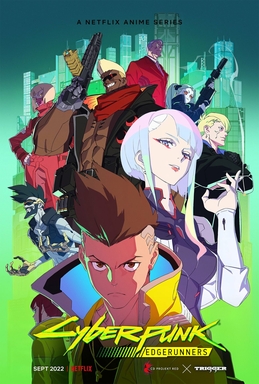
I’ve recently enjoyed a little foray into cyberpunk fiction. I watched the Netflix anime series Cyberpunk: Edgerunners, and also read the book on which it is ultimately based. Technically, the TV series is based on the video game Cyberpunk 2077, which is itself based on the tabletop RPG Cyberpunk. But the creator of the RPG has acknowledged that he was heavily influenced by the book Hardwired, by Walter Carlos Williams, which is the book I read. I could definitely see the influence, traced all the way back through this pop culture pedigree – in concepts, style, and even a little bit in content.

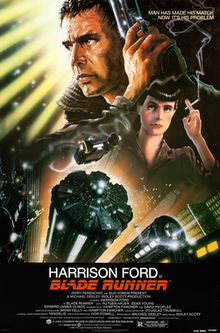
Typically, a story in this genre features protagonists who are marginalized outcasts, and also stylish and cool (that’s the “punk” part). They make a living as outlaws, and probably party hard in their free time (that’s the “edge” part). They have expertise with advanced technology, and interface with it using direct neural connections (that’s the “cyber” and “hardwired” parts). Their adversaries are powerful corporate conspiracies in a futuristic setting where multinational (or even multiplanetary) corporations have eclipsed governments. Think Blade Runner. It’s something about the zeitgeist of the time period when cyberpunk began (the dawn of the Reagan era) to imagine corporations replacing governments as the rulers of Earth. You might even think of it as sci-fi authors being characteristically prescient.

The anime series Cyberpunk: Edgerunners has all these genre features, in a slick, stylized package with a kind of pastel-colored 1980s aesthetic. To me watching it felt very much like sitting in on RPG sessions where a motley crew of adventurers go on missions, collect loot, and buy ever more powerful upgrades to their fancy cybernetic enhancements. In that sense it’s a fitting adaptation of the tabletop game and video game that are its ultimate source material. That’s not to say there’s no bigger picture or meaningful plot; there is an over-arching story and there is depth to the show. It’s very well executed, making it both an artful and an entertaining series. I should warn you, though, if you plan to watch it, that it depicts extremely graphic violence, as one would only expect from a roleplaying game (I’ve RPG’d a lot, and trust me, gamers love to live out their violent fantasies around the gaming table).

The signature element of the cyberpunk genre is undoubtedly the cybernetic implant – some sort of machine enhancement of the human body. Maybe it’s a weaponized appendage. Maybe it’s enhanced senses, like eyes that can see infrared. Or maybe it’s a chip in the brain that let’s you interface directly with computer systems, hacking into them in a virtual reality mode where you become a digital avatar travelling through cyberspace. In the original cyberpunk tradition, you typically have ports, in your skull or perhaps at the base of your neck, where you jack in to cyberspace by plugging in wires. These stories were all dreamed up before there was ubiquitous wifi, so it makes sense that writers would assume that was how to connect to a network. It’s like how in 1970s sci-fi people in the far future are using computers with monochrome CRT monitors. You could always argue that a direct wired connection would be faster and more reliable than a wifi connection, so it would still be desirable to have a USB port in your head, even in a cyberpunk future saturated with wifi networks.

In Cyberpunk: Edgerunners you have all these kinds of cybernetics. The specific ones that a character uses define a sort of character class for them; whether they are combat oriented – which could mean being strong and fast for hand-to-hand combat, or just very accurate with long range weapons – or a computer hacker, sneaking into the corporate networks while the combat characters watch over them or create a distraction. Sometimes drugs are needed to work with these cybernetics; specifically, in this anime, a character has to take immunosuppressants to prevent his body from rejecting his implants. In the book Hardwired, the characters took a stimulant drug which helped their nervous systems to interact with their hardware.

This sort of transhumanist idea of replacement cyborg parts has been around for decades now, but how close are we to neural implants in real life? We really only have implants which provide minor electrical stimulation for medical rehabilitation purposes; they sort of help an organ by giving it a little kickstarting jolt. Implants directly into the brain have been used to treat neurological or mood disorders, but all they are doing is alleviating symptoms with a tickle of electricity. They are a far cry from science fiction human-machine interfaces that link the mind to digital space. For that, we still have to rely on our old-fashioned senses, and put on a set of VR goggles. As for cybernetic body parts, well, the closest we have is myoelectric prostheses, which can pick up electric signals from the muscles, thus enabling the user to control the prosthetic. But this signal is picked up from the surface; no implant is needed.

The idea of direct neural connection to electronics, merging human consciousness with machines, remains a far-fetched sci-fi fantasy, like sentient androids or colonies on other planets. But it’s one which science fiction keeps revisiting. You may have encountered it recently in episodes of the anthology series Black Mirror, where people have devices in their brains or eyes which record everything that happens to them, or interface them with an augmented reality social network. These are simply used as vehicles for plots involving crime, troubled relationships, or people struggling for social acceptance. These stories could have been told without including imaginary technology, but the point is to look at modern life by extrapolating from current trends.

Today we engage with social media platforms on our pocket computer devices; will we someday be doing it via chips implanted into our brains, with a thought and a flick of the eye instead of a swipe of a finger? I’m going to say no, no we will not. But I guess it’s not impossible. Just not going to happen in our lifetimes, if ever. And if something like that did become available in our lifetimes, I would have to say nope, no thank you. I do not want a chip in my brain.

I do think it’s interesting how cyberpunk dystopias in the Blade Runner style – where edgy, marginalized protagonists use their cybernetic implants for leverage in high stakes, high risk adventure stories – have evolved into a style more like Minority Report, where boring dystopia participants meander through garish commercial hellscapes, desperate to find meaning in their existence. The awesome short video Hyper-Reality, reminiscent of a Black Mirror episode, captures this milieu perfectly:

This isn’t the dystopia I signed up for.

I see this new kind of cyber-setting as a reflection of the overall shift in the zeitgeist – away from the free-wheeling times of my Gen X youth and toward the Millennial era, with its emphasis on group participation and consensus-seeking networks. It’s a friendlier, if more banal, kind of cyberspace. The stories are no longer the picaresque adventures of original cyberpunk, but instead Kafkaesque social commentaries, where the individual is stripped of all agency, and the audience is invited to gaze in horror at the bland nightmare that modern society has become.

The setting of Cyberpunk: Edgerunners could be seen as a holdover from the early days of cyberpunk, a place where some kind of individual achievement is still possible, like the video game worlds that are increasingly the domain of older generations. If only in our imaginations, technology can make us better. But even this anime has a warning about technological hubris, about which I won’t elaborate lest I spoil the show. I’ll just make this statement, though it is a cliché: if we rely too much on technology to enhance our capabilities, we risk losing touch with our true selves.

Subreddit of the Week: aboringdystopia

Subreddit of the Week: aboringdystopia

I’m sure you’ve heard of the science fiction genre known as cyberpunk. I’m not talking about the recently released video game; I mean science fiction that is high-tech and futuristic in its setting, and politically and socially dystopian in its outlook.

An early example in film was the 1982 movie Blade Runner, based on a Philip K. Dick novel from the 1960s. It was a real trendsetter for the cyberpunk aesthetic – bleak and dark, but also slick and stylish. Like how everybody dressed in the nineties. It promised a future of brutal corporate rule and film noir cool. Did it get that future right? Not really. But as I broke it down in a review of the film and its sequel, science fiction is just modern mythology. Most of it is fantastical and completely unrealistic in its extrapolations; the real point of it is to explore the human psyche and the meaning of life.

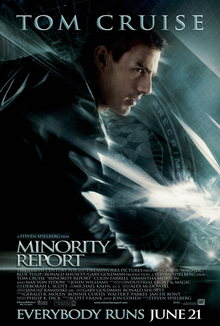
Cyberpunk took off in the late 1900s, but as the world turned and the real cyberworld evolved, it looked less and less like the jaded, punk settings of the fictional genre. Going into the twenty-first century, cyberreality was becoming helpful and consumer-oriented. A more accurate depiction in dystopian fiction of the world to come was captured in the 2002 movie Minority Report, also based on a Philip K. Dick story. It was quite prescient in its forecast of a society under continuous surveillance and evaluation. The world it envisions even includes targeted advertising, and self-driving cars. The big thing it gets wrong is that, instead of psychics, we use machine learning algorithms to predict human behavior.

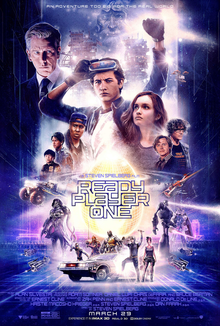
Now that we’re one-fifth of the way into the new century, and deep into the Crisis Era, the luster has come off of the consumer-oriented market society. Concerns about wealth and income inequality, and the plight of the underprivileged, have come to the forefront of popular dystopian science fiction. In the 2018 movie Ready Player One, a powerful tech company dominates society and a permanent underclass can only find respite in virtual reality. Sound anything like your life?

In the even higher stakes story of 2013’s Elysium, the Earth inhabited by the poor is almost unlivable, and the privileged middle class has taken to an orbital space habitat, where they enjoy vastly superior lives to those on the planet surface. Clearly this society has not dealt successfully with either climate change or the rising cost of healthcare. As far-fetched as the techonologies may be in the film, the allegory of an elite class that has completely abandoned any sense of social responsibility is unmistakeably relevant.

What kind of harrowing, high-tech dystopia do we actually live in today? That takes me to the title of this post and the subreddit /r/aboringdystopia. Here the teeming digital masses chronicle all the petty injustices and cruelties of the modern world, all the ways the megacorps keep us under their thumbs, all the ways that late stage capitalism is failing us. We did manage to get to a dystopia of oppressive corporate rule after all, it’s just not futuristic or cyberpunk.

Somehow we became an oppressed underclass without keeping any sense of style. We’re sitting in our sweatpants and binge-watching Amazon Prime video, not running around in cool leather jackets like Neo and Trinity. But in our own sad way, we’re jacked in to the Matrix and trapped in a dystopia.

Where on Earth has Steve been?

Where on Earth has Steve been?

You may have noticed I haven’t been blogging much lately. My new job keeps me very busy and drained of energy. I’m sure you are familiar with the experience; after work all that you are up for is some TV and then going to bed, and your hobbies suffer as a result. My eyes are tired all the time since I computer all day at work anyway and they just need a rest. I’m feeling old.

Ok, enough complaining.

Now, it’s actually possible that the real reason I haven’t been blogging is that I have been lost in virtual reality. Yes, that’s right, last Christmas the family got a VR system. It was a gift for the eldest son, but of course we’ve all played around with it a bit.

It’s an early model HTC VIVE that we got used on ebay for 500 bucks (that includes tax and shipping). At that price, it wasn’t something extravagantly out of reach for a middle class family. That’s basically the price of a smartphone, which everyone in every economic class has today. That suggests we may well be on our way as a society to a Ready Player Onestyle corporatist oligarchical dystopia where we all spend as much time as possible escaping our drab reality for a colorful virtual world where anything is possible.

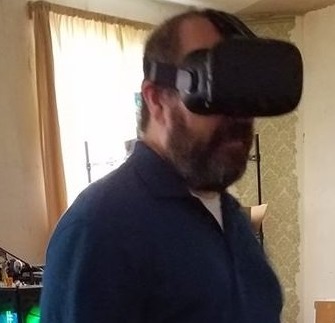
Oblivious to the horrors of my nightmare society, I am lost in a reality of my own making.

Oh wait, we’re probably already there.

So anyway, the system we got consists of a headset, two controllers and two cameras that are mounted on very tall stands. We had to clear out a space in our computer room and then calibrate the system to establish the physical play area that maps into the virtual space. It’s not really enough space to move around in, but the VR apps don’t actually require walking about anyway. Movement within the worlds is always handled by some mechanic involving the hands or controllers.

The technology isn’t advanced enough (not at 500 bucks, anyway) to create any kind of pseudo-realistic experience. The experience is fully immersive, but only in a world that is abstract and cartoon-y. And I find that it is difficult to read text in the VR display, which is annoying, but that’s my old and tired eyes. I’m sure that the text is readable if you have better vision than I do.

So far my favorite games are Beat Saber, where you slice at flying cubes with light sabers, and Job Simulator, which is a satire of modern working life. There are a lot of combat, FPS and RPG-type games that the boys like, but that is not for me. And yes, every app we have is some kind of game. The one exception would be Google Earth.

You’ve probably experienced Google Earth on your computer screen, but let me tell you, it’s much better in the full immersion of VR. You can pick up the globe and turn it around, or zoom into it and fly around all over the planet like you’ve always wished you could do in reality. It actually can be a bit disorienting when you zoom in too fast and are suddenly perched on a mountaintop.

In the close up the view is actually rendered graphics, not satellite imagery. I assume this is for software performance reasons. Again, not a hyperrealistic simulation. But you can still go into the street view, at which point you are in slideshow mode. Even here you are limited to what actual photos the Google Earth crew assembled together, but it’s still an amazing experience to wander the streets and roads of the Earth, anywhere you want.

I wanted to check out places I’ve lived as a child, so I got a set of coordinates from my Dad. I found that even immersed in the VR, there was only a vague sense of remembering the locations. They probably have changed a lot in the many decades that have passed (WP: Google invents time travel so they can expand their maps feature into the fourth dimension). But I’ll say, there was some inkling of a memory.

Even revisiting places from just twenty years or so in my past, it was hard to tell if I remembered them. Part of it might be that the perspective (I mean the actual visual perspective) is a bit different in street mode in the VR than it would have been in real life. And you can’t move around and look at anything closely; as stated earlier, it’s a slideshow.

The greatest familiarity that came with a strong sense of nostalgia was in visiting Blacksburg, Virginia, where I went to college. This is a place that will always be close to my heart, because I spent so many formative years there. I also got a strong emotion out of visiting my old neighborhood in North Carolina, where I had a house for ten years. But that is a very recent memory, and connected to a big change in my personal life.

Other than that, I don’t know, it’s just as much fun to wander around in the countryside of New Zealand (which I’ve never visited in “meat space”) as it is to try to recognize places which I did visit long ago. So if you’re wondering why I am not knocking on your door, it’s probably because I am off exploring strange lands in a virtual space. Someone please check on me every once in a while to make sure I’m not badly dehydrated.